
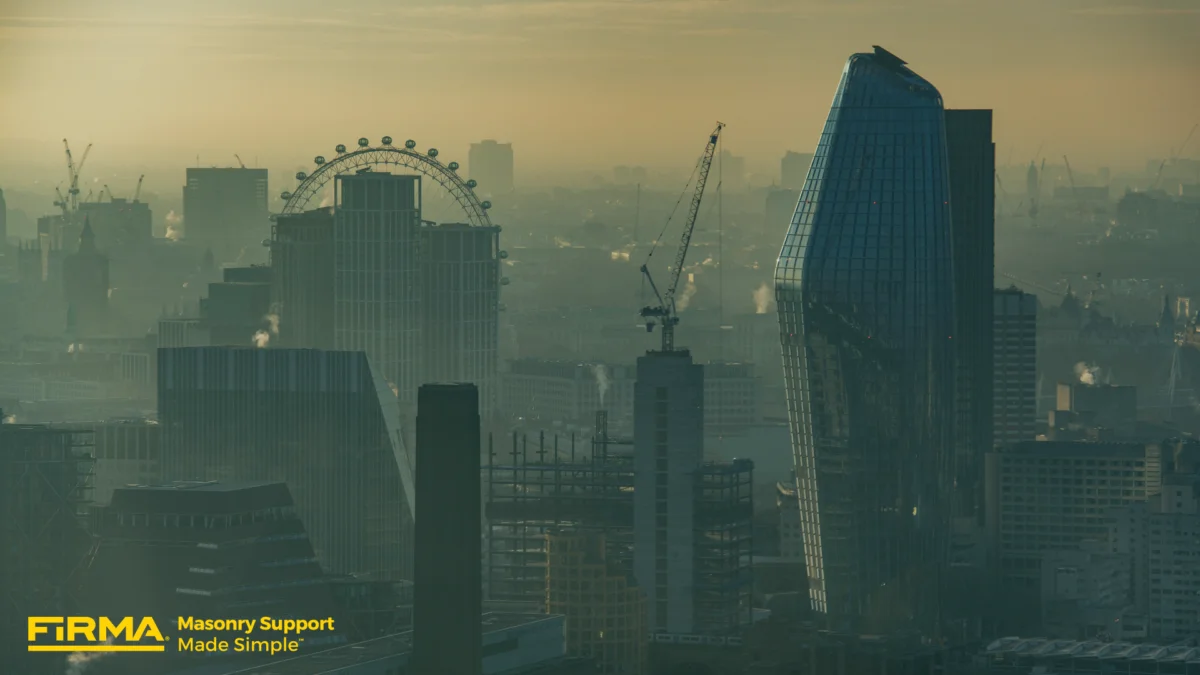
UK construction in 2026 is under sharper scrutiny than ever before. Regulation is tougher, risk is more visible, and margins remain under pressure. Expectations around compliance, coordination and delivery have fundamentally shifted, and there is little tolerance for uncertainty.
Success now depends on making better decisions earlier, reducing avoidable complexity, and delivering buildings that stand up to long-term scrutiny. So what is really shaping UK construction in 2026, and where should the industry be focusing its attention?
1. Regulation Is No Longer a Phase. It Is the Baseline.
The impact of the Building Safety Act is now fully embedded in day-to-day delivery. Gateway approvals, dutyholder accountability and the requirement for clear, auditable information are no longer emerging concepts. They are standard expectations.
In 2026, successful projects are increasingly defined less by how quickly they move on site, and more by how well they are structured before they get there.
What is changing:
- Design freeze is happening earlier, particularly on higher-risk residential buildings
- Specialist packages are under greater scrutiny at technical approval stages
- Design responsibility is being more clearly allocated and more actively challenged
In practical terms, this is reshaping how teams select and engage their supply chain. Clarity, accountability and technical confidence are carrying greater weight from the outset.
2. Early Engagement Is Shifting From Preference to Necessity
The industry has talked about early specialist engagement for years. In 2026, it is increasingly becoming a commercial reality.
With programme risk, compliance risk and cost certainty all under pressure, earlier involvement of key packages is proving one of the few reliable ways to maintain control as projects progress.
Across the market, this is driving:
- Earlier technical conversations at RIBA Stage 3 and 4
- Greater focus on coordination and buildability
- Fewer late-stage changes where risk cannot be clearly justified
- The underlying shift is clear. Late decisions now carry greater consequences than ever before.
3. The Definition of Value Engineering Is Evolving
Traditional value engineering has often focused narrowly on cost. In the current market, that definition is broadening.
In 2026, value is increasingly understood in terms of risk reduction, programme stability and technical certainty. Decisions are being assessed not just on immediate savings, but on their downstream impact on approvals, coordination and delivery.
This is prompting a more considered approach to how systems are designed, reviewed and agreed, particularly on regulated buildings where change is harder and scrutiny is higher.
4. Design Capacity Is Emerging as a Key Constraint
While manufacturing capacity across much of the supply chain has stabilised, experienced design resource remains under pressure.
As projects become more regulated and coordination-heavy, the availability and responsiveness of design teams is having a direct impact on programme confidence. This is especially true for specialist packages that sit at the intersection of structure, envelope and fire performance.
As a result, the market is placing greater emphasis on design capability, technical rigour and the ability to manage complexity without slowing momentum.
5. Confidence Is Becoming a Differentiator
In 2026, decision-makers are paying closer attention to who they can rely on when pressure builds. With risk more visible and accountability more clearly defined, confidence in the supply chain is playing a bigger role in commercial discussions.
That confidence is not built on claims. It is built on consistency, clarity and the ability to engage constructively when projects become challenging.
For specialist packages in particular, the market is increasingly rewarding partners who bring a sense of control to the process and maintain it from early design through to delivery.
6. Made Simple® Reflects Where the Industry Is Headed
Construction in 2026 is characterised by more stakeholders, more oversight and more information moving around a project at speed. In that environment, simplicity is not a shortcut. It is a response to genuine complexity.
Reducing friction in the process, improving clarity of communication and avoiding unnecessary complication are becoming more highly valued across the industry.
This is why FIRMA’s Made Simple® approach continues to resonate. It reflects a clear focus on commercial transparency, smarter design thinking and agile delivery, supported by the professionalism and reliability that long-term relationships are built on.
Looking Ahead
The UK construction industry in 2026 is more disciplined, more accountable and more demanding than ever before. But it is also more focused on clarity, collaboration and long-term value.
Those who will succeed are not simply those who move fastest, but those who bring confidence, structure and simplicity to increasingly complex projects.
At FIRMA, that focus is not new. It is how we continue to work. We have kept ahead with our focus on design and project delivery excellence, communication and technical capability.
Share article
Get In Touch
Find out how we can apply our Made Simple® approach to your next project - Call 01603 722 330
FIRMA works alongside contractors and design teams to bring structure, transparency and technical certainty to complex masonry support packages. If you would like to discuss an upcoming project, our team is ready to engage.